Monitor the SBOMs you already generate, so you can see what's affected when new CVEs appear.
Continuous monitoring, release and environment context, ownership routing, and audit evidence. All built around the SBOMs your pipeline already produces.
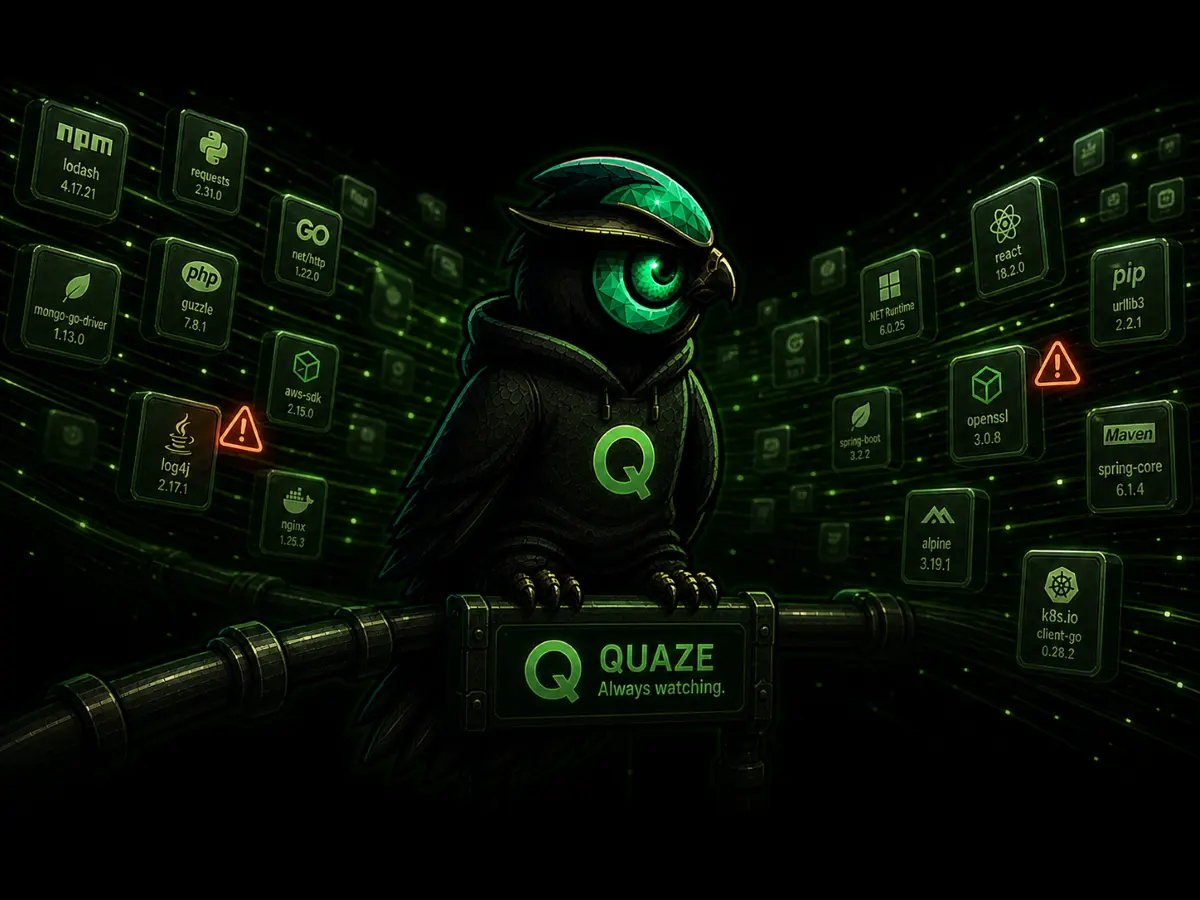
Never miss a new vulnerability in something you ship.
One-time scans tell you what was true the day you ran them. Quaze keeps watching every release you have told it about and surfaces anything new, without your team running anything by hand.
- New findings appear automatically as the threat landscape changes
- A clear inbox of what is new, what is gone, and what changed
- No more re-running scans to find out you missed something
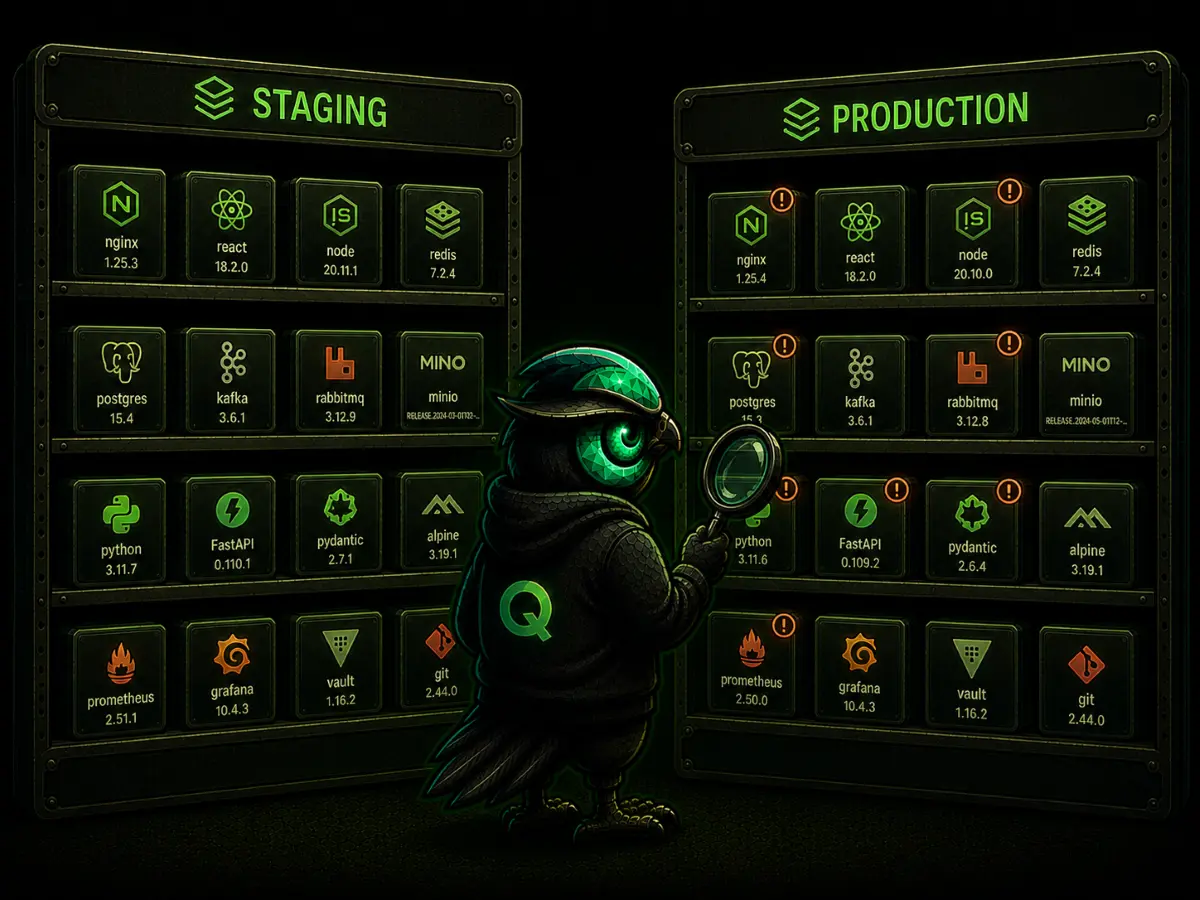
Which releases and environments are affected, today.
Most tools tell you what was bundled into an artifact. Quaze tells you the full stack of what is actually deployed, by environment, by release, on any date you ask about.
- Treat environments and releases as first-class concepts
- Look back at what was running on any past date
- Confident answers when an incident or audit hits
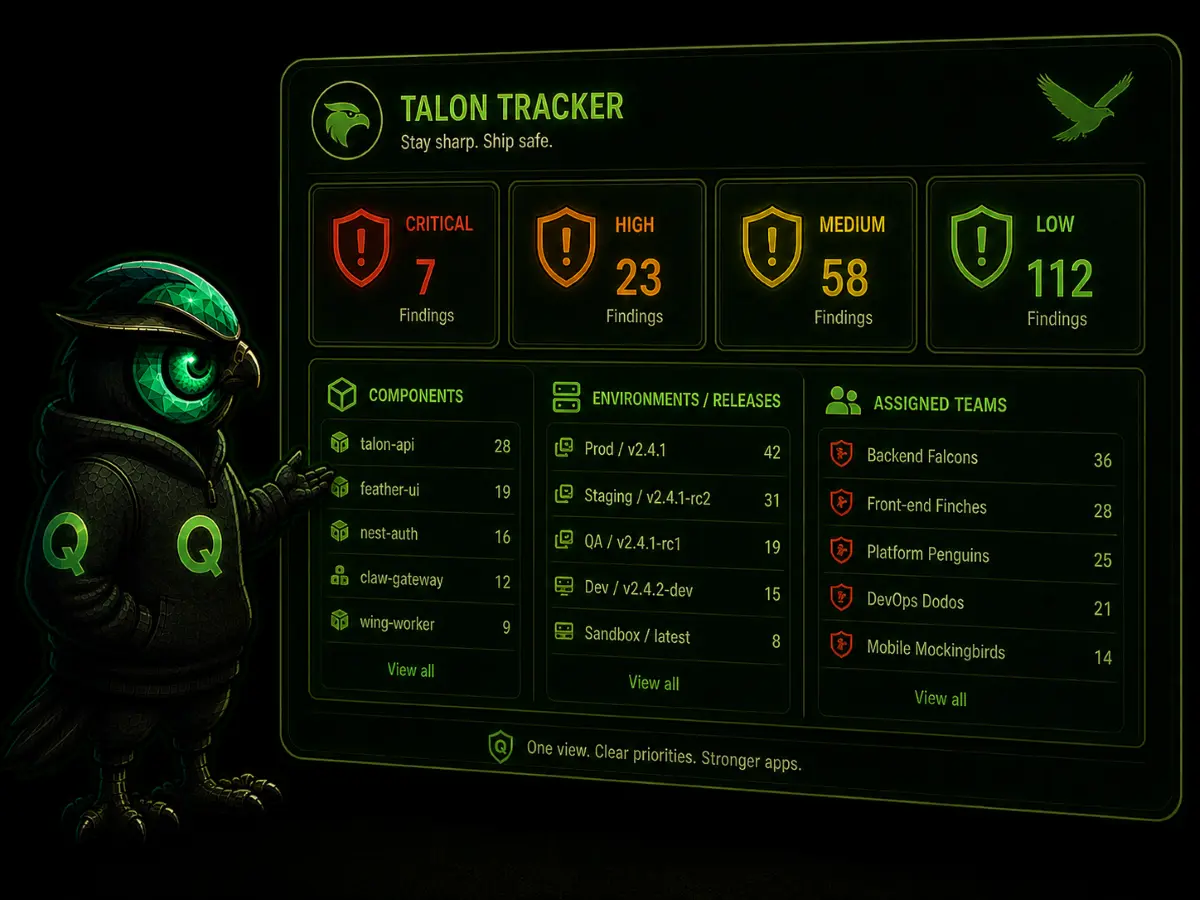
Who owns the affected component?
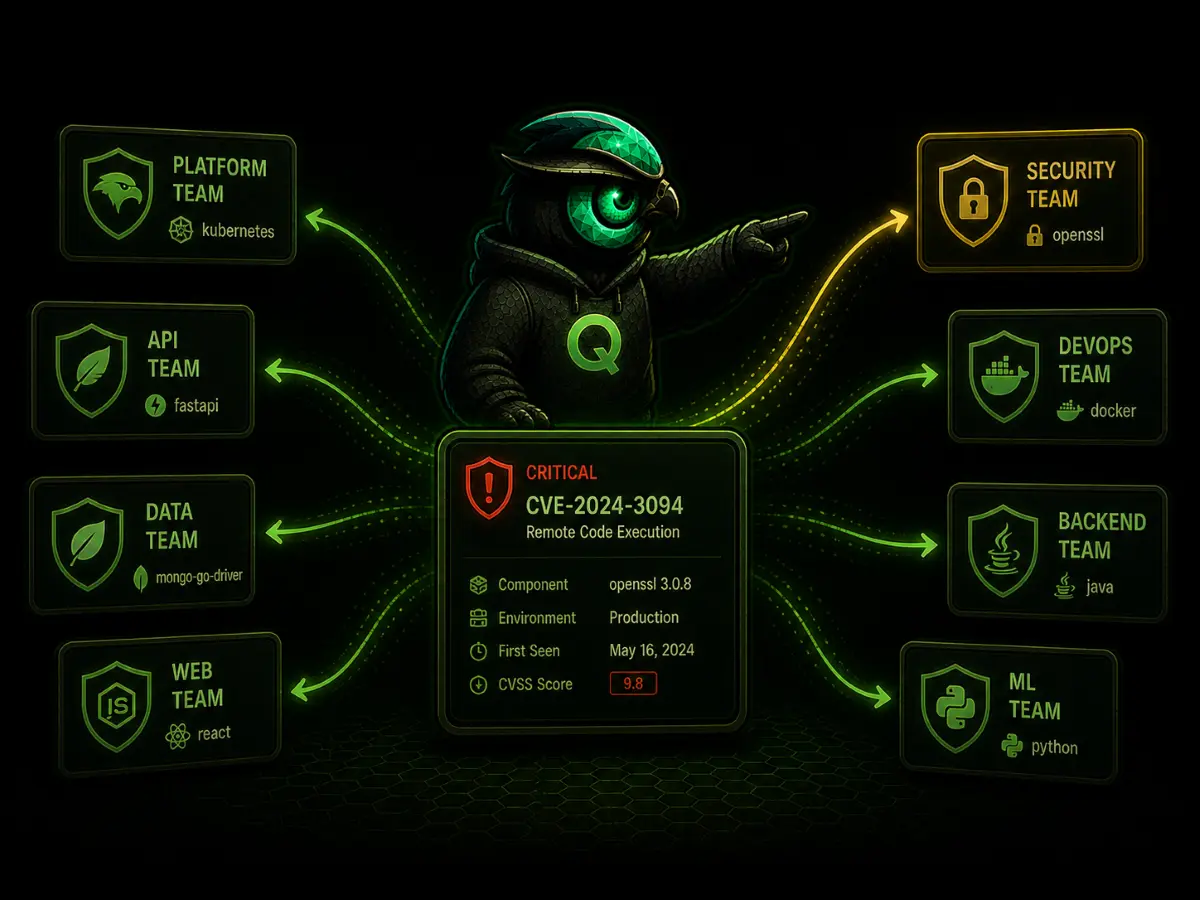
A vulnerability without an owner is a vulnerability that does not get fixed. Quaze ties every finding to a team, with a workflow your security and engineering people can actually agree on.
- Map components and findings to the teams that own them
- A clear status workflow: open, in progress, fixed, accepted risk
- Targeted notifications instead of inbox noise
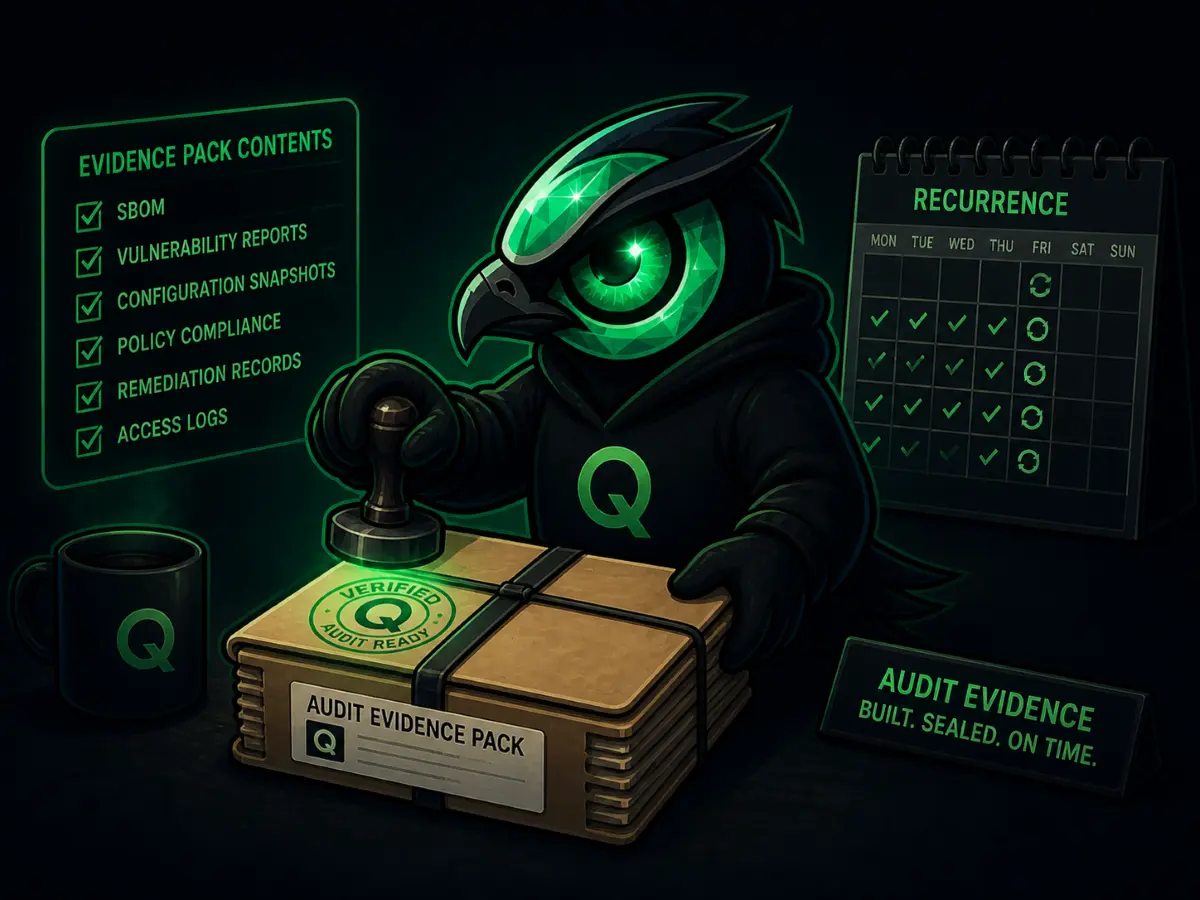
What evidence do we need for an audit?
When an auditor asks what was deployed last quarter and how a finding was handled, you should have an answer ready, not a sprint to recreate one.
- Scheduled, repeatable evidence packs
- Searchable history of who changed what, and when
- Retention windows that match your obligations
Which of these findings can actually be reached?
A long list of CVEs is not a list of real risks. Most vulnerabilities sit in code paths your application never calls. Quaze can assess whether your own code reaches each one and whether it is exploitable, so the real risks rise to the top. It is opt-in, and people stay in control of every decision.
- A reachability and exploitability verdict proposed for each finding
- Graph-derived where it is certain, AI source analysis where it is not
- Your team spends its time on the findings that actually matter
Keep your own tools.
Quaze ingests the SBOMs you already produce in CycloneDX or SPDX format, and fits into your existing build, release, and deployment workflow. No rip-and-replace, no agent on your servers.
Bring your own SBOMs
Whatever your build pipeline already produces, Quaze can take in. CycloneDX, SPDX, or native Syft JSON, uploaded by API, CI step, or registry sync.
Made for security and engineering
A shared workspace that does not force one team to use the other team's tool. Security gets evidence; engineering gets ownership-routed alerts.
Quiet by default
Quaze runs in the background and only speaks when something needs attention. No noisy dashboards, no daily inbox flood.
A worked example: a new OpenSSL CVE is published. Quaze shows which releases contain the affected component, which environments those releases run in, and routes the alert to the team that owns it.
Keep reading
- ProductRead more
AI reachability and exploitability analysis
Rule out the vulnerabilities your code can never reach.
- SolutionRead more
SBOM monitoring for releases and environments
The monitoring layer your SBOMs need after generation.
- CompareRead more
Quaze and Dependency-Track
Hosted vs self-hosted, and where each fits.
- IntegrationRead more
Quaze + Trivy
Pair Trivy SBOM generation with continuous monitoring.
Start tracking what's actually running.
Quaze's Free plan lets you watch one product end to end. Upgrade when you're ready, talk to sales when you need more.